
New Book Highlights – Summer 2026
This highlight features some of the new books available at the FIMS Graduate Library. Browse the FGL Collection to see what other books we have available.
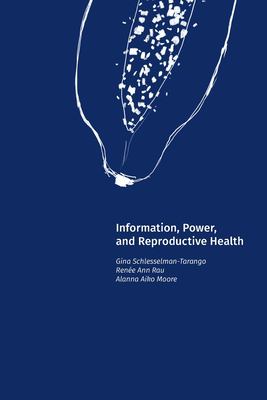
Information, power, and reproductive health
Gina Schlesselman-Tarango, Alanna Aiko Moore, and Renée A. Rau
Z716.42 .I54 2025
Rooted in reproductive justice, this book examines how power shapes what reproductive health information is created, controlled, withheld, or shared. It shows how entrenched beliefs about whose bodies deserve care, which topics merit research, and which issues are dismissed or taboo influence what information becomes visible, or stays hidden.
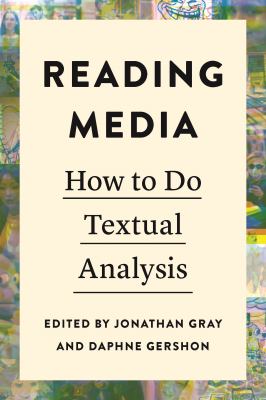
Reading media: how to do textual analysis
Jonathan Gray and Daphne Gershon
P91.3 .R295 2026
An updated toolkit for doing textual analysis in today’s digital media environment, showing how close reading of meaning, form, and representation remains essential for understanding media’s power. Through diverse case studies, from film and TV to TikTok, Afrobeats videos, games, memes, and more, the volume demonstrates flexible, politically attuned methods for analyzing contemporary media texts.
Slow librarianship: reflections and practices
Ashley Rosener
Z665 .S55 2026
Workers in slow libraries are focused on relationship-building, deeply understanding and meeting patron needs, and providing equitable services to their communities. This is a compilation of writings from librarians working in many different libraries throughout the United States, Canada, and Italy. The authors describe what slow librarianship means to them in their work and roles while sharing concrete practices and ways to enact the tenets of slow librarianship in your wor.
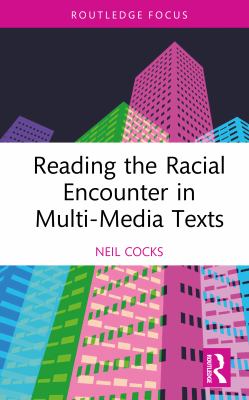
Reading the racial encounter in multi-media texts
Neil Cocks
P94.5.M55 C63 2026
This book examines how race is constructed through close analysis of “encounter” scenes across three multimedia works: a video essay on Gypsy aesthetics, Boots Riley’s I’m a Virgo, and Jean Baudrillard’s America. By applying extended, reflexive, fine‑grained analysis, the book shows how these texts’ complex perspectives and framings open up new ways of understanding racial representation and the challenges of interpreting it. It will interest scholars and advanced students seeking fresh methodological approaches to how race is performed, negotiated, and contested across diverse media landscapes.
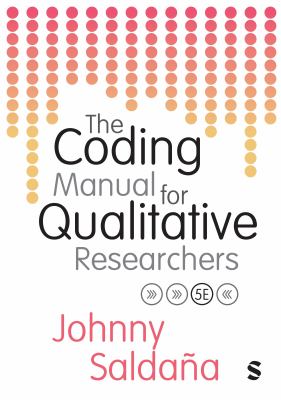
The coding manual for qualitative researchers
Johnny Saldaña
H62 .S31855 2025
This essential guide delves into the latest advancements in coding, including the integration of AI tools like ChatGPT-4, empowering researchers to enhance their data analysis processes and outcomes.
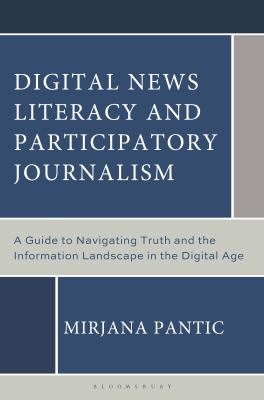
Digital news literacy and participatory journalism: a guide to navigating truth and the information landscape in the digital age
Mirjana Pantic
PN4784.C615 P36 2026
This book examines the challenges of today’s information‑saturated news environment, emphasizing how misinformation, disinformation, and unreliable content circulate online. It outlines how understanding journalistic standards and practicing critical evaluation can help audiences distinguish facts from opinions and falsehoods, and highlights participatory journalism as a way to strengthen public engagement and accountability within an increasingly polarized digital media ecosystem.
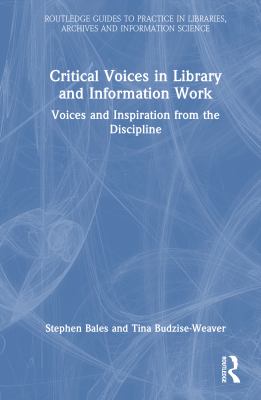
Critical voices in library and information work: voices and inspiration from the discipline
Stephen Bales and Tina Budzise-Weaver
Z720.A1 B35 2025
This book includes 25 profiles of LIS professionals whose socially conscious projects and research are reshaping the field. Through conversations about the art, literature, and music that inspire their critical practice, the book situates their work within broader institutional, historical, and cultural contexts. Together, these narratives highlight the diversity, motivations, and transformative commitments that define contemporary critical librarianship for practitioners, students, and scholars.
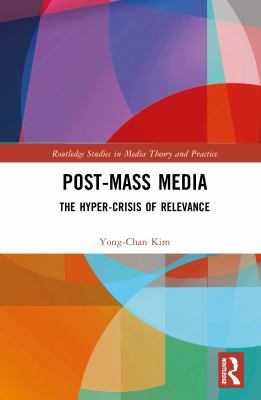
Post-mass media: the hyper-crisis of relevance
Yong-ch’an Kim
HM1206 .K5625 2026
This book reconceptualizes media as an all‑encompassing environment rather than a set of tools, tracing the shift from the centralized mass‑media era to today’s fragmented, participatory landscape. It argues that this transition has produced a new “super‑crisis of relevance,” where personal and local stories gain visibility but are also vulnerable to commodification and manipulation by global platforms. By offering a new framework for understanding media’s influence, the book equips readers to critically assess the ethical, social, and cultural implications of the contemporary media environment.